
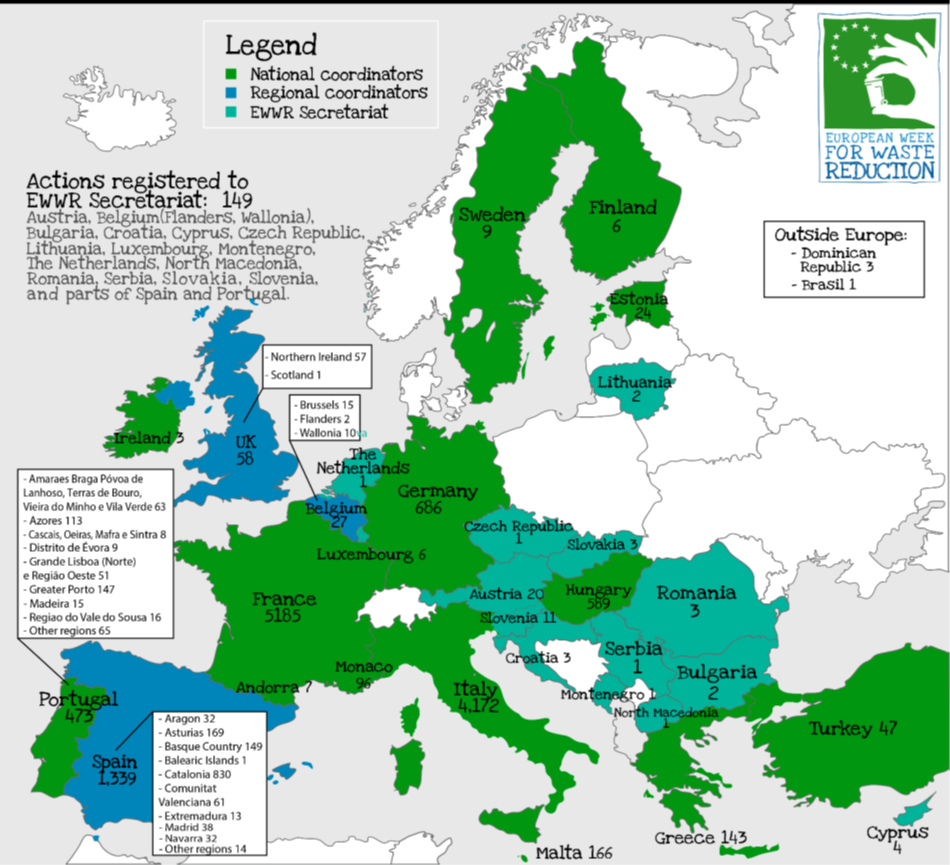
The European Week for Waste Reduction (EWWR) is set its 17th edition, from 22 to 30 November 2025. During this week, 13,107 actions focusing on waste reduction, product reuse and repair, materials recycling, and clean-ups took place across 33 countries in Europe and beyond.
The EWWR is a leading international campaign advocating waste prevention during a dedicated week in November.
Participants from schools, public administrations, companies, NGOs and citizens collaborate to organise awareness activities on local to international scales. The objective of these actions is to change the behaviour surrounding consumption patterns and waste generation habits with the aim of contributing to reach waste reduction and climate neutrality targets.
In 2025, 13.107 actions were implemented in 33 countries thanks to the contribution of 34 coordinators and thousands of action developers.
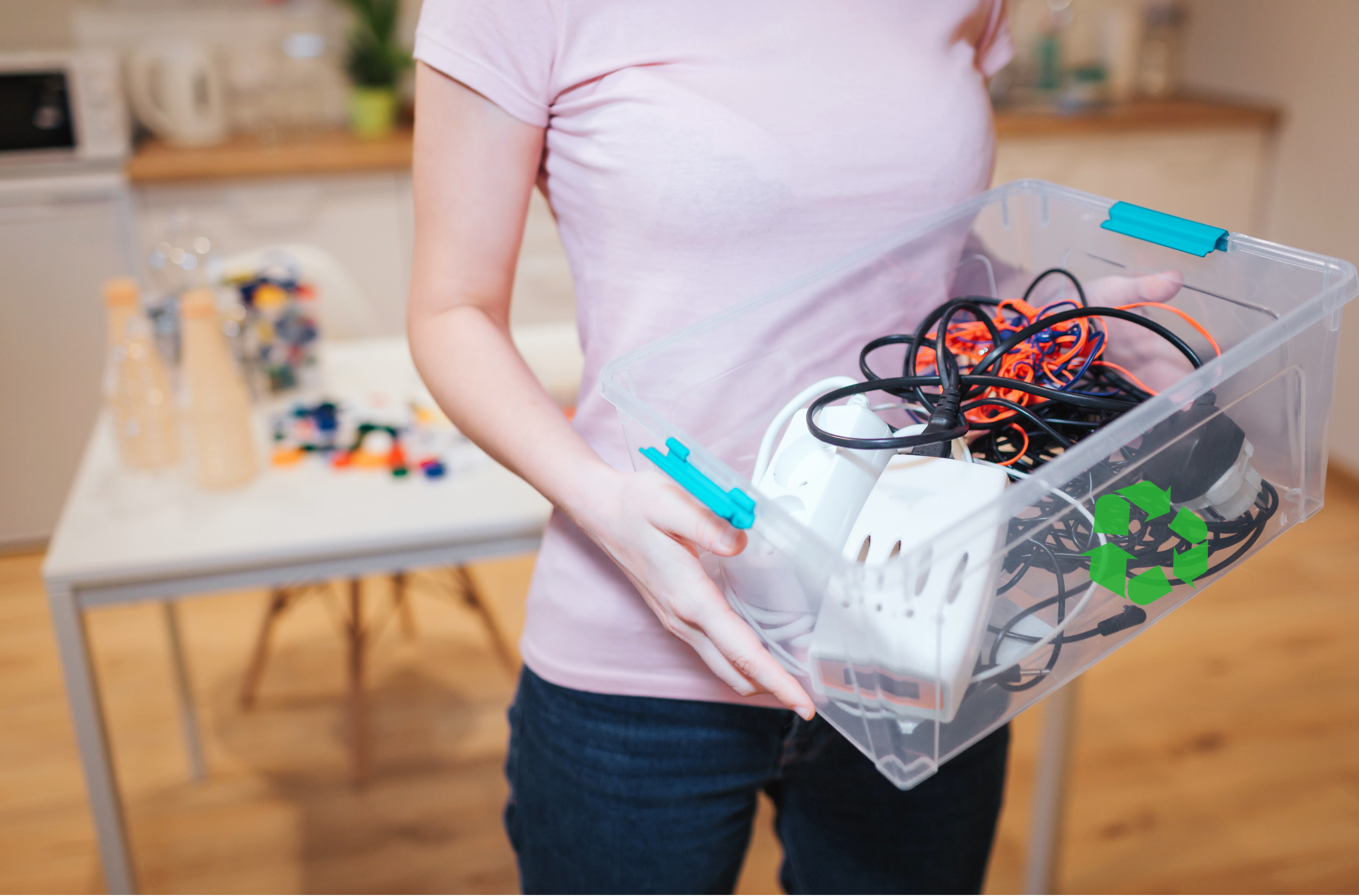
Act on electronics before they turn into Waste
The 17th edition of the European Week for Waste Reduction seeks to raise awareness about
the EU’s fastest-growing waste stream, WEEE (or e-waste) – Waste Electrical and Electronic
Equipment. The selection of this thematic focus for the 2025 edition of the EWWR wants to raise
awareness on reduce, repair and reuse activities for electric and electronic equipment that can be
implemented by all the different categories of stakeholders.
“If you want to feel hope, read the EWWR actions. I’m inspired by what people are doing all over Europe”
Marieke Schouten, European Committee of the Regions.
WEEE includes six product categories:
- Temperature Exchange Equipment: e.g., refrigerators, freezers, air conditioners.
- Screens and Monitors: e.g., TVs, computer monitors, laptops (>100 cm2 screen).
- Lamps: e.g., fluorescent tubes, LED lamps.
- Large Equipment (≥50 cm): e.g., washing machines, ovens, vending machines.
- Small Equipment (<50 cm): e.g., vacuum cleaners, microwaves, tools, toys.
- Small IT and Telecom Equipment (<50 cm): e.g., mobile phones, routers,
tablets.
Electrical and electronic devices are essential to daily life, but the waste they generate is a growing
challenge for the EU. In 2022, the EU placed 14.4 million tonnes of EEE on the market but collected only 5 million tonnes of WEEE (11.2 kg per person). E-waste is the EU’s fastest- growing waste stream, rising about 2% per year.
Almost half of all WEEE is still not collected, most Member States miss collection targets, and only about 40% is recycled. WEEE contains hazardous substances but also valuable and critical raw materials. Proper collection, treatment, and recycling are crucial to reduce environmental and health risks, improve resource efficiency, and support a circular economy.
“The added value of this campaign is people acting on the ground, human beings who do believe in a green transition and work in communities for waste reduction”
Françoise Bonnet, Secretary General at ACR+ – European Coordinator
For more information, is available the press file.
The EWWR Steering Committee
The European Week for Waste Reduction is led by the EWWR Steering Committee. Its members are: ACR+ (Association of Cities and Regions for sustainable Resource management), ADEME (Agency of the ecological transition, France), Electrão, Bruxelles Environnement-Leefmilieu Brussel (Belgium), EMWR (The Eastern-Midlands Regional Waste Office, Ireland), ARC (Catalan Waste Agency, Spain), AICA (Associazione Internazionale per la Comunicazione Ambientale, Italy), the European Committee of the Regions, LIPOR (Intermunicipal waste management of Greater Porto, Portugal), the Environment Directorate of the Principality of Monaco, Wasteserv Malta Ltd (Malta), and Zero Waste Europe.